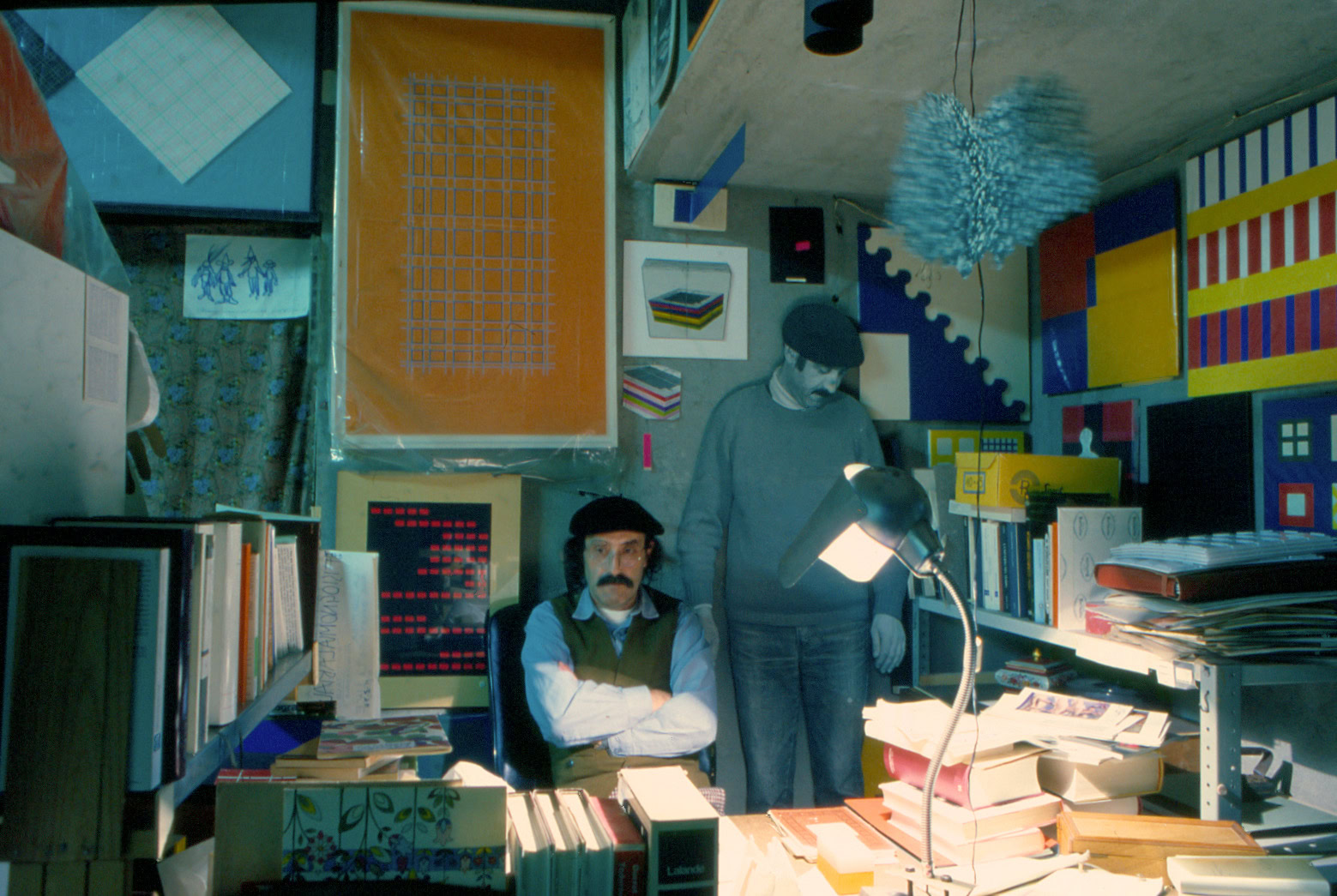
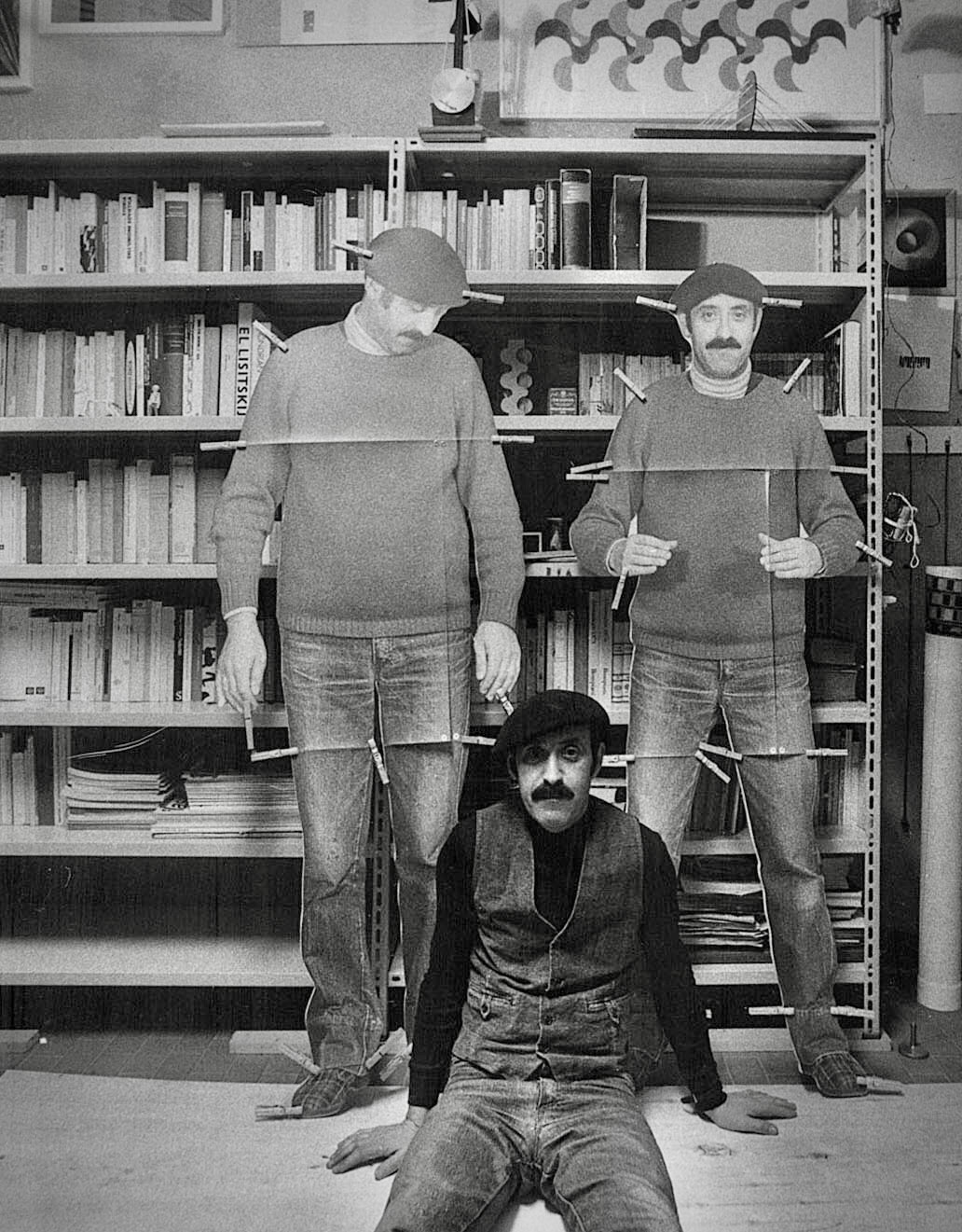
Gianfranco Chiavacci was born in Pistoia on December 1, 1936.
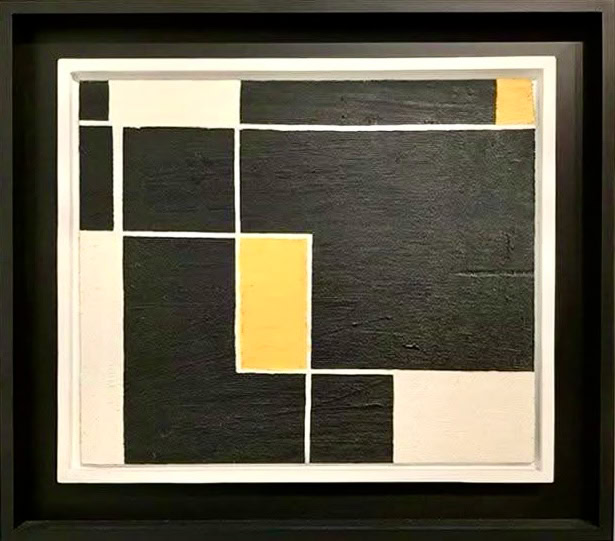
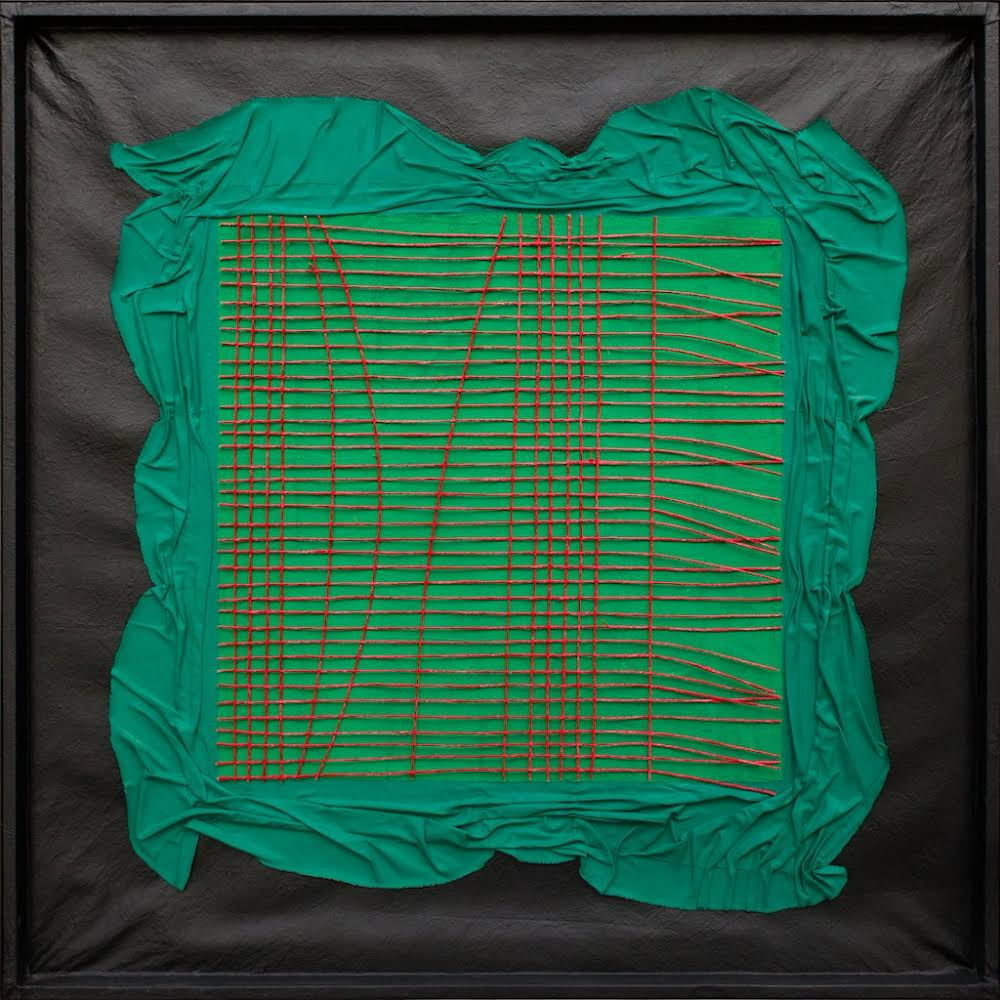
His research, which spanned over fifty years, occupies an original and in many ways pioneering position within the Italian and European art scene, linked to the intersection of mathematical thought, binary logic, and visual experience: a painting that consciously positions itself *between* programmed art and computer art, without identifying with either.
Language Formation (1957–1962)
During his formative years, Chiavacci gradually developed his own visual language, a process that paved the way—without yet explicitly stating it—for the decisive encounter with binary logic that would shape his entire subsequent production.
Binary Certainty (1963–1979)
1963 marks the true origin of Chiavacci's binary research: following IBM programming courses commissioned by the Cassa di Risparmio di Pistoia, the artist created his first works based on a binary lattice, introducing the bit as an autonomous aesthetic and generative unit. This date preceded the computer art exhibitions in Stuttgart (Nake, Nees, 1965) and the Berlin exhibition "Wege zur Computerkunst" (1968), confirming Chiavacci's historical priority with respect to these international references. On a theoretical level, his research converged independently with Max Bense's Informationsästhetik and Shannon's information theory.
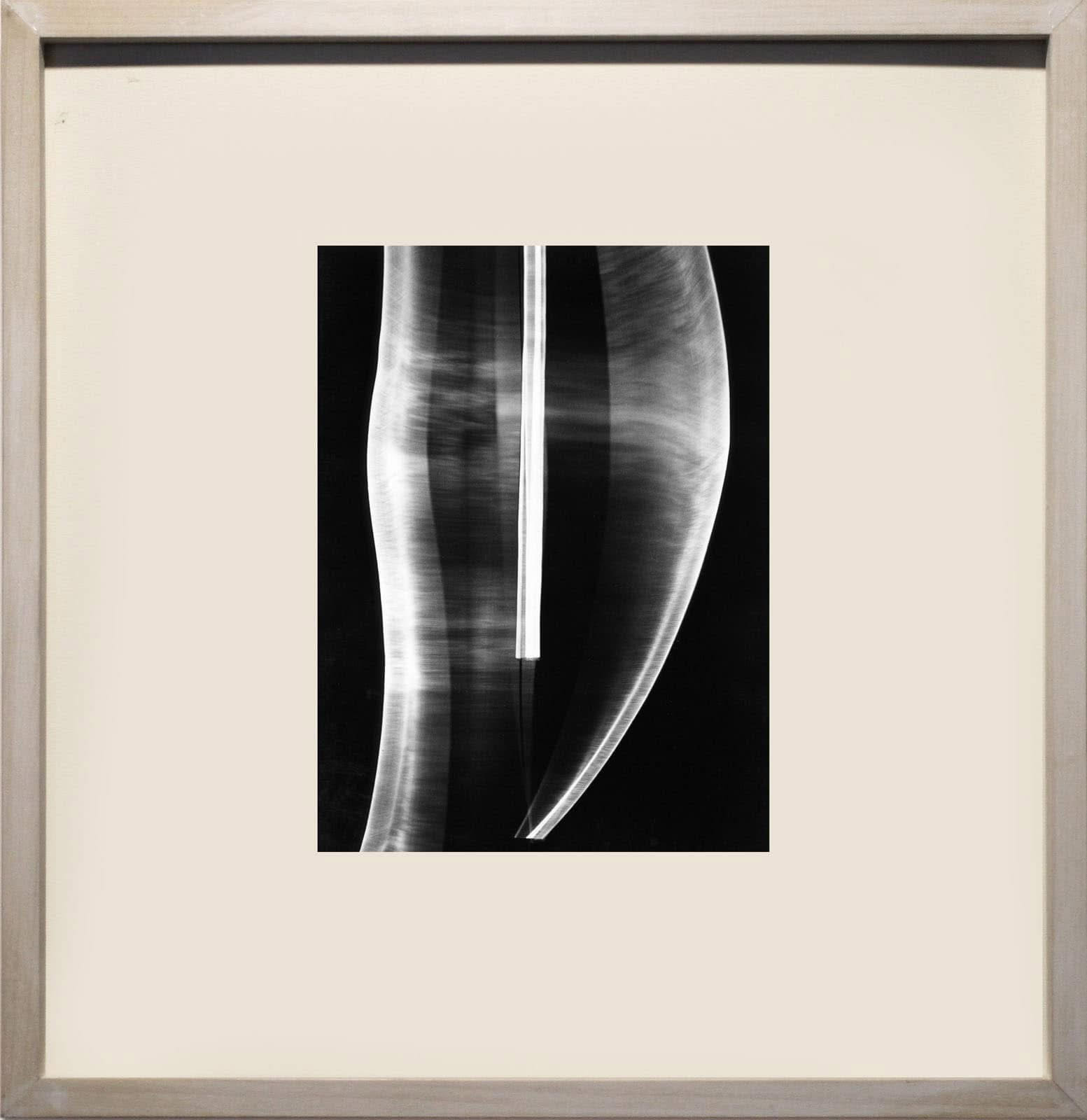
In 1971, the Binary Curves were born, the first visual form directly generated from the concept of the bit as the minimal element capable of expressing the choice between two comparable events; The sculpture "Red Binary Curves" (1971), the group's paradigmatic work, belongs to this phase. During the same period (1971–73/75), Chiavacci conducted photographic research organized into four techniques—translations, blurring, rotations in space, and rotations on the plane—realized using cardboard or filaments treated with luminescent colors and exposed under a Wood's lamp, regardless of the type of film used. During this phase, photography established itself as an autonomous and equal operating mode to painting, both grounded in the same logic of binarity.
In 1973, Chiavacci wrote the text for the exhibition at SpazioTi Zero, the Experimental Center for Aesthetic Research in Turin: an early theoretical reflection on binarity that moves from the mathematical concept of base two to binary logic and bionics, introducing the image of the "logical cage" of the square and the principle that the dual horizontal-vertical reading is always subordinate to the overall reading of the work.
Double Ontology, Data-Find (1980–1999)
1980 marked a moment of theoretical reflection with the text "Binariacy and Two-Dimensional Space"—not a starting point, but a retrospective synthesis of an already mature path. This was followed, in sequence, by "Evolution of Binarity" and subsequently "Limits," "Ho Said Say"—a theoretical-poetic text with a recursive structure intended for declamation—and "Binarity." During these years, Chiavacci developed the theory of the double ontology of data/find: the work as a replicable logical system (data) and as an irreversible corporeal trace (find). The text "Valentino, the Abyss, the Silence, the Digital Society" dates from 1997.
Final Synthesis, The Death of the Bit (1999–2006)
The final phase of his research concluded in 2006 with the work "The Lonely Bit. The Abandoned Bit. Solitude of the Bit. The Death of the Bit," a single work—not a cycle—that concludes his production related to binary logic and represents its final synthesis, even though the production of some works continued until 2008.
Gianfranco Chiavacci died in Pistoia on September 1, 2011, leaving behind a body of work—several thousand works, including paintings, binary logic networks, and photography—now preserved and studied by the Gianfranco Chiavacci Archive. Between 2019 and 2024, a selection of the artist's abstract and conceptual photographs was presented at six editions of Paris Photo.